
By Helene Waters
Why are so many young adults today struggling to function, to find themselves, to understand their worth?
And why does it so often feel like the older generations respond with criticism instead of support?
I belong to Generation X.
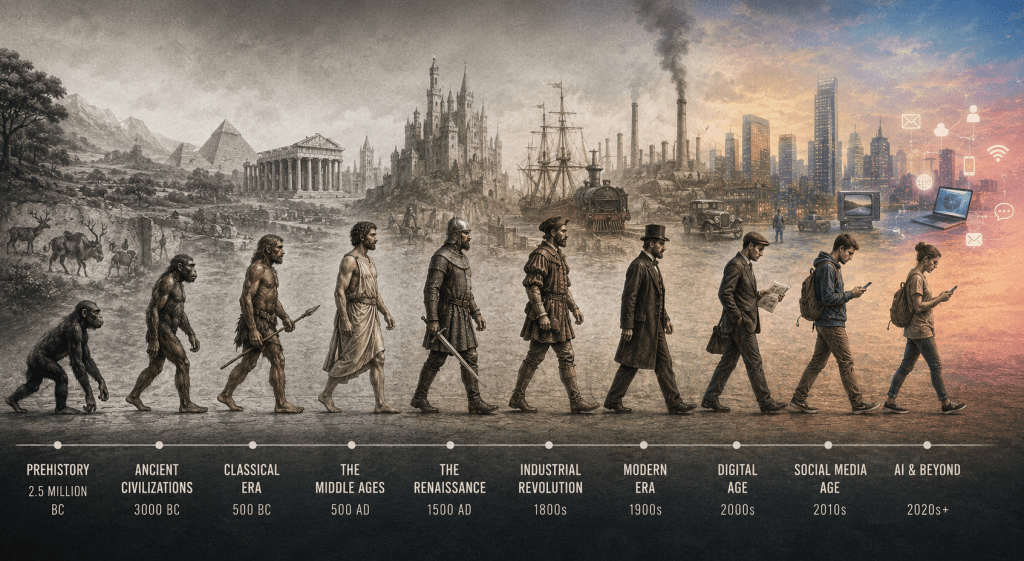
I can already feel the collective eye-roll at the mention of “generational labels.” Humanity really did decide to alphabetise itself and somehow accepted this as perfectly normal social behaviour. But whether we like the labels or not, generations are shaped by the worlds they grow up in.
And those worlds matter.
While the idea of social generations dates back to the 19th century, the modern naming system really exploded in the early 1990s.
The “Baby Boomer” generation was the first to receive a widely recognised label after World War II because the birth-rate increase was impossible to ignore.
Then came “Generation X,” which became globally popular after Douglas Coupland’s 1991 novel Generation X: Tales for an Accelerated Culture. Suddenly, marketers and media realised that categorising people by age groups was profitable.
“Generation Y” followed shortly after as a placeholder name for the generation after Gen X before the term “Millennials” eventually took over.
And after that?
We committed fully to the alphabet.
Gen Z. Gen Alpha. Generation Beta.
Humanity looked at social identity and apparently decided: “Letters. This will do.”
But behind the labels is something important:
Shared experiences shape generations differently.
After World War I, historians began recognising that massive world events, technology, economics, and cultural shifts fundamentally change how groups of people think, cope, connect, and survive.
And this brings me back to the question:
Why are young adults struggling so much?
Because the world they inherited is vastly different from the one many older generations grew up in.
Every generation has faced enormous challenges.
But every generation has also had freedoms the next generation quietly lost.
Gen X children grew up with freedoms many young adults today cannot even imagine.
We disappeared on bicycles for hours. We made mistakes privately. We embarrassed ourselves privately. We experimented with identity privately.
If we had a bad haircut or said something stupid at 14, it wasn’t immortalised online.
There was no audience.
There was no algorithm.
There was no pressure to turn every moment of your life into content.
Today’s young adults, particularly Gen Z, have grown up in a world where visibility is constant.
Their lives are online. Their friendships are online. Their identities are online. Their mistakes are online.
Some by choice. Some not.
And the psychological pressure that comes with that is enormous.
Young adults today are expected to:
🔺 perform academically
🔺 build careers early
🔺 maintain a social presence
🔺 stay physically attractive
🔺 be emotionally aware
🔺 stay productive
🔺 build personal brands
🔺 somehow remain mentally healthy through all of it
At the same time, they are bombarded daily with curated versions of other people’s lives.
Perfect bodies. Perfect relationships. Perfect success stories. Perfect lifestyles.
And human beings were never designed to compare themselves to thousands of people every single day.
And then came COVID.
For older generations, lockdowns were disruptive.
For many young adults and teenagers, they were psychologically formative.
Media and technology had always played a role in modern life, but during COVID, screens became almost everything.
Schooling, friendships, entertainment and identity all happened online.
For long periods of time, digital connection was the only connection available.
And during a stage of life where young people should have been learning social confidence, independence, emotional regulation, and real-world interaction, many instead found themselves isolated behind screens during one of the most developmentally important periods of their lives.
This was also the period where influencer culture exploded.
Social media personalities became companions, role models, entertainers, and emotional distractions all at once.
Trends became more extreme because people were desperate for connection, visibility, and belonging during a time when normal human interaction was restricted.
Some of those trends were harmless.
Others were dangerous.
But at the centre of all of it was one simple human need:
CONNECTION
In many ways, an entire generation learned to socialise through performance.
To be seen became more important than to simply be.
And the psychological effects of that are still unfolding.
Older generations often respond with frustration.
“We struggled too.” “We just got on with it.” “Young people are too sensitive.”
But the environments are not the same.
Previous generations experienced hardship too, absolutely.
Many Gen X children grew up emotionally neglected. Mental health struggles were ignored. Children were taught to “toughen up.” Feelings were often dismissed rather than explored.
But today’s young adults face something different entirely:
constant comparison, constant exposure, constant evaluation, constant pressure.
There is no switch-off point anymore.
Even rest has become performative.
People now feel pressure to have aesthetically pleasing breakdowns online while drinking expensive coffee under motivational quotes. Society has somehow monetised emotional exhaustion and turned it into a lifestyle category.
And while older generations often criticise younger adults for “not coping,” many fail to recognise that the human brain has never before had to process this level of stimulation, comparison, and visibility from childhood onward.
This does not make younger generations weak.
It makes them overwhelmed.
There is also another uncomfortable truth we need to talk about:
Many young adults are struggling to understand their worth because they were raised in environments where worth became tied to performance.
Likes. Followers. Productivity. Achievement. Appearance. External validation.
The message becomes: “If people approve of me, I matter.”
And when approval disappears, identity collapses with it.
That is a terrifying way to live.
At the same time, older generations are often carrying wounds they themselves never addressed.
Many were raised to suppress emotion, survive hardship silently, and keep moving no matter the emotional cost.
So when they see younger people openly discussing mental health, burnout, identity struggles, or emotional overwhelm, they sometimes interpret it as weakness instead of honesty.
Not because they are cruel.
But because vulnerability was never safe for them either.
And this is where generations begin missing each other completely.
One side says: “You don’t understand how hard this is.”
The other replies: “You wouldn’t have survived our world.”
And perhaps both are right.
The truth is that every generation is shaped by the world it inherited.
Gen X survived emotional distance. Millennials survived instability and economic pressure. Gen Z is surviving psychological overload.
Different wounds. Different battles. Different survival skills.
But criticism without understanding helps nobody.
Young adults today do not need constant mocking for struggling in a world that never allows them to switch off.
They need guidance. Perspective. Support. And spaces where they are allowed to exist without feeling constantly measured against impossible standards.
Because beneath the sarcasm, memes, dark humour, and screen addiction…
many of them are exhausted.
Not lazy. Not weak.
Exhausted.
And maybe instead of asking: “What is wrong with this generation?”
We should start asking:
“What kind of world did we hand them?”


Leave a Reply