
By Helene Waters
Last week I published a blog titled The Loneliest Lonely
This piece is an expansion of that conversation, particularly from the perspective of growing up inside a long-term relationship and how deeply those relationships shape who we become as adults.
A Life Built Together
I spent 26 years with one person.
Eighteen of those years were marriage.
That is more than half my lifetime. Which feels slightly unhinged when I say it out loud.
When you spend that long loving someone, the relationship does not simply become part of your life.
It becomes part of your identity.
Your routines. Your future plans. Your traditions. Your understanding of love. Even your understanding of yourself.
Somewhere along the way, you stop thinking in terms of “mine” and start thinking in terms of “ours.”
Our side of the bed. Our favourite restaurant. Our way of loading the dishwasher incorrectly but passionately defending it anyway.
Long-term love is strange like that.
At first, it feels romantic.
Then one day you realise you have been buying the same brand of coffee for fifteen years because they liked it better, and you cannot remember whether you ever actually enjoyed it yourself.
Growing Up Together
People often romanticise the idea of “growing up together.”
And sometimes, it truly is beautiful.
There is something incredibly special about building a life with someone from a young age.
You learn adulthood together. You survive hardships together. You create inside jokes, routines, family traditions, shared memories.
You witness each other becoming people.
There is comfort in being fully known by someone.
Someone who knows how you take your tea, what your silence means, which stories still hurt you to tell.
Someone who remembers versions of you that no longer exist.
That kind of intimacy does not happen overnight.
It is built in tiny ordinary moments.
Thousands of them.
The late-night pharmacy runs. The shared exhaustion of raising children. Sitting in waiting rooms together. Arguing over whose turn it is to take out the rubbish or feed the dog, who sits there staring at both of you like a sad Victorian orphan, even though snacks were given to the barrel-sized hound 30 minutes ago.
Texting each other from different aisles of the same supermarket because apparently marriage eventually becomes a low-budget scavenger hunt.
And for many years, it feels safe.
Becoming “Us”
But there is another side to growing up with someone too.
Sometimes people build themselves around the relationship before fully discovering who they are as individuals.
Roles quietly form over time.
The caretaker. The provider. The peacemaker. The avoider. The fixer. The one who carries everything silently because ostensibly emotional suppression was a personality trait heavily rewarded by adulthood.
After twenty or thirty years, those roles can become so ingrained that people stop growing together and begin simply functioning beside one another.
That is where loneliness quietly begins.
It’s not dramatic or cinematic.
It happens slowly…
Two people sleeping in the same bed while emotionally drifting further apart year after year.
Nobody notices at first because the bills are still being paid. The children still need lifts to school. Someone still remembers to buy toilet paper.
Life keeps moving.
And that is part of what makes it so dangerous.
The Slow Loss Before the Ending
On the 24th July 2024, at 44 years of age, I entered the realm of widowhood.
But long before illness took my husband physically, there were parts of our relationship that had already drifted away quietly over time.
And this is something people do not talk about enough.
Because when relationships break down after decades together, the grief becomes incredibly complicated.
Especially when the person who once felt like your safest place slowly becomes someone you no longer recognise emotionally.
There is something profoundly painful about looking at the person who was once your best friend and realising they now feel like a stranger living in the same house.
Not because of one explosive event.
Sometimes there is no dramatic betrayal.
Sometimes it is simply years of tiny disconnections accumulating silently until one day you realise you have become roommates with shared history and matching trauma.
When Grief Starts Early
People often imagine grief as something that begins when a relationship ends through death or divorce.
But sometimes grief begins years earlier.
Sometimes it begins quietly:
in the silence, in the emotional distance, in conversations becoming functional instead of meaningful, in feeling emotionally alone beside someone you still deeply love.
And when relationships built over decades finally collapse, people are often shocked by how disorientating it feels.
Because you are not only grieving the person.
You are grieving the life built around them.
The future you imagined. The routines. The traditions. The version of yourself that existed within that relationship.
After twenty-six years, you do not simply lose a partner.
You lose the architecture of your life.
And nobody really prepares you for how strange that feels.
The way your body still expects them to walk through the door.
The way your brain automatically reaches for their favourite snacks in the supermarket.
The way you sometimes turn to say something before remembering there is nobody standing there anymore.
Grief is full of humiliating little ambushes like that.
The Question People Always Ask
I have been asked many times why I did not just divorce my husband.
The answer is simple.
Because you are not just losing the person, your person, you are losing everything you built together. The life. The history.
And the realisation that losing your partner is like becoming the last living speaker of a dead language.
Nobody else fully remembers the private world the two of you built.
The jokes. The references. The history attached to ordinary objects.
Nobody else remembers who you were at twenty-three.
Or thirty-one.
Or who you became after the children were born.
There is always hope too.
Even when things are fractured.
Hope that things will improve. Hope that you will somehow find your way back to each other. Hope that this version of loneliness is temporary and not the permanent emotional climate of your life.
Humans can survive astonishing amounts of unhappiness if hope is involved. Entire industries rely on this fact.
And even then, leaving is not a clean emotional exit.
It is not a door closing behind you and peaceful silence finally beginning.
Because sometimes you still love the person who is ending the marriage.
And that changes everything.
Loving Someone Who Has Already Let Go
There is a particular kind of heartbreak people rarely talk about honestly.
Still being in love with someone who has already emotionally left the relationship.
Not hatred. Not indifference. Not closure.
Just love that has nowhere useful to go.
And when children are involved, there is no real separation from that person, no matter what the legal paperwork says.
You still have to speak to them.
About school shoes. Dentist appointments. Who is fetching whom on Thursday.
Ordinary administrative conversations somehow taking place alongside catastrophic emotional collapse.
So you do not get the luxury of healing in isolation.
You heal in fragments.
In interruptions.
In messages arriving just when you were beginning to feel okay again.
And every interaction carries weight, because this is still the person you loved, still the person you sometimes love, and now also the person you are trying to emotionally survive.
It creates a strange contradiction.
Grief and contact in the same breath.
Distance and intimacy forced into the same calendar.
Losing More Than a Relationship
That is the part people underestimate.
You are not simply choosing whether to stay or leave a partner.
You are standing inside an entire lifetime and trying to decide whether to dismantle it.
Because when long-term love breaks down, it is never just the relationship that fractures.
It is continuity.
The invisible structure your life was built around.
The assumptions you stopped noticing because they had become part of your emotional landscape.
And perhaps this impacts people differently in different ways.
Women often lose themselves quietly inside long-term relationships.
Many become caretakers before they become themselves.
They spend years managing emotions, maintaining stability, shrinking needs, carrying invisible emotional labour, and confusing endurance with love.
By the time the relationship fractures, many are left asking:
“Who am I outside of this relationship?”
But men often disappear inside these relationships too, just differently.
Many are taught that vulnerability is weakness and failure is unforgivable.
So instead of speaking, they retreat.
They bury themselves in work. In distractions. In silence. In emotional withdrawal disguised as stoicism.
Many men are never taught how to talk about loneliness until it becomes unbearable.
And when long-term relationships collapse, they are often left equally disoriented, equally grieving, but without the language or emotional support systems to navigate it openly.
For some people, emotional life narrows so completely around one relationship that when it ends, there is no emotional infrastructure left.
Friendships faded years ago.
Vulnerability became uncomfortable.
The relationship quietly became the entire support system.
Not because people are weak.
But because nobody teaches us how to remain whole while loving someone deeply.
Growing Apart in Plain Sight
Some couples do grow together beautifully over a lifetime.
Others slowly grow around each other until there is no room left to breathe.
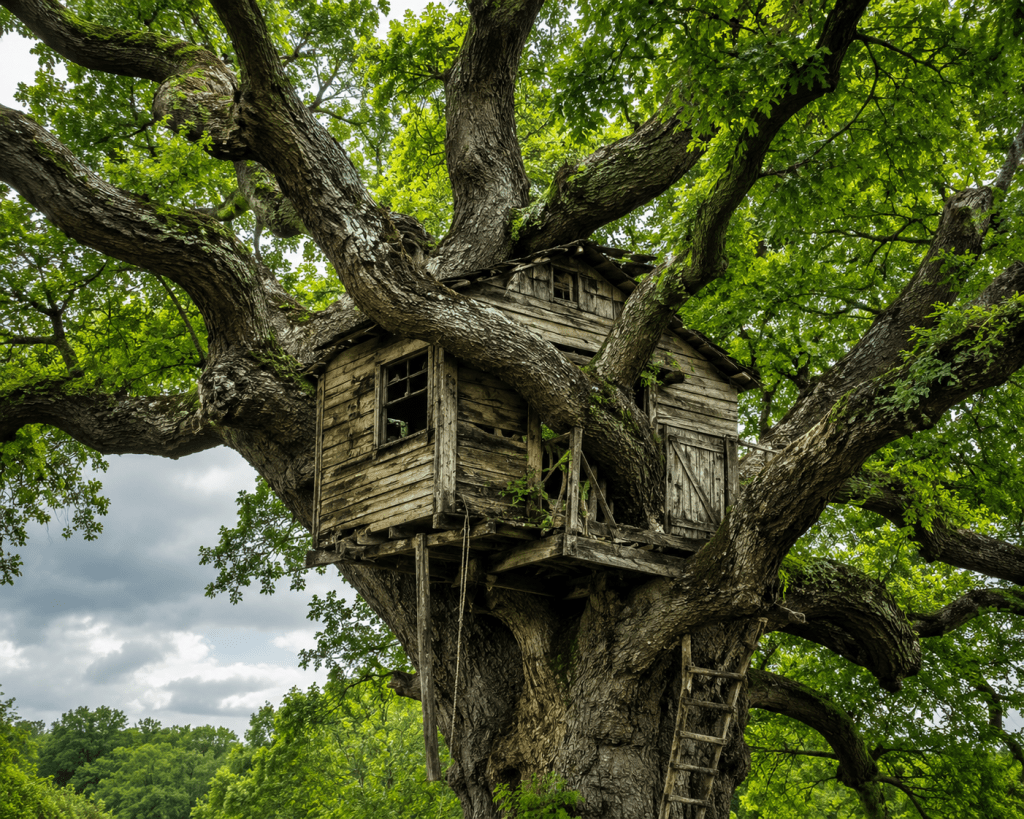
Like a tree slowly growing around a treehouse built decades earlier, where laughter was frequent and memories were made.
Over time, the structure shifts so gradually you barely notice it happening, until one day it no longer feels safe to move naturally inside it.
And sometimes the deepest grief is not losing the relationship itself.
Sometimes the deepest grief is realising you were already lonely long before it ended.
Because there is a particular kind of sadness that comes from loving someone for decades.
And slowly watching the connection disappear while both of you are still standing there…


Leave a Reply