
By Helene Waters — February 8, 2026 by Cheese & Jam
There’s a quiet crisis most of us only notice in hindsight. When a buddy stops showing up, when work becomes the only safe place to be, or when a simple walk feels heavier than it should. Men’s mental health isn’t “just stress,” it’s a constellation of invisible pressures that society trains men to shrug off rather than name or address.
Why the Silence?
For too long the “man up” trope wasn’t just bad advice, it was the default: feelings are weakness, vulnerability is loss of control, and asking for help doesn’t fit the prototype of strength many of us internalised early. That silence may seem harmless, but it’s not — it nudges men toward isolation, unhealthy coping habits, and at worst, tragedy.
People don’t talk about this much because it’s not convenient. It doesn’t look like a broken arm that everyone can see. It looks like tired shoulders, subtle irritability, or a stone-faced determination not to “burden” anyone. Left unchecked, these patterns deepen quietly until the world looks bleaker than it did before.
Reading the Signs Before They Get Loud
Depression in men often doesn’t look like the stereotype on TV. Instead of tears, it might show up as a short fuse, late nights at the office, or constant “keeping busy.” Anxiety doesn’t always whisper “I’m scared” — it can show up as restlessness, tight muscles, or trouble sleeping. Recognising these shifts is the first step toward change.
The tricky part is that many men aren’t taught to identify emotional distress the same way they’d recognise a physical injury. A sore shoulder gets ice and rest. A sore spirit gets ignored.
Nature, Ritual, and Real Talk
One simple, powerful way to create space for emotional reset is nature — a real forest, park, or even a tree-lined trail. There’s science behind it. Time outdoors slows down the brain’s “go-go” mode and lets attention unwind. That subtle shift gives room for honest thought instead of just autopilot survival mode.
Pair that with connection — not the “likes” or group chats, but real presence with another person — and something shifts. Authentic conversation has a way of cutting through the noise men build around themselves. A walk and a real talk suddenly become more than exercise and small talk; they become a lifeline.
Tools That Work — Not Because They’re Fancy
Confronting mental health doesn’t require dramatic gestures. Here are grounded, practical steps that help men find emotional steadiness:
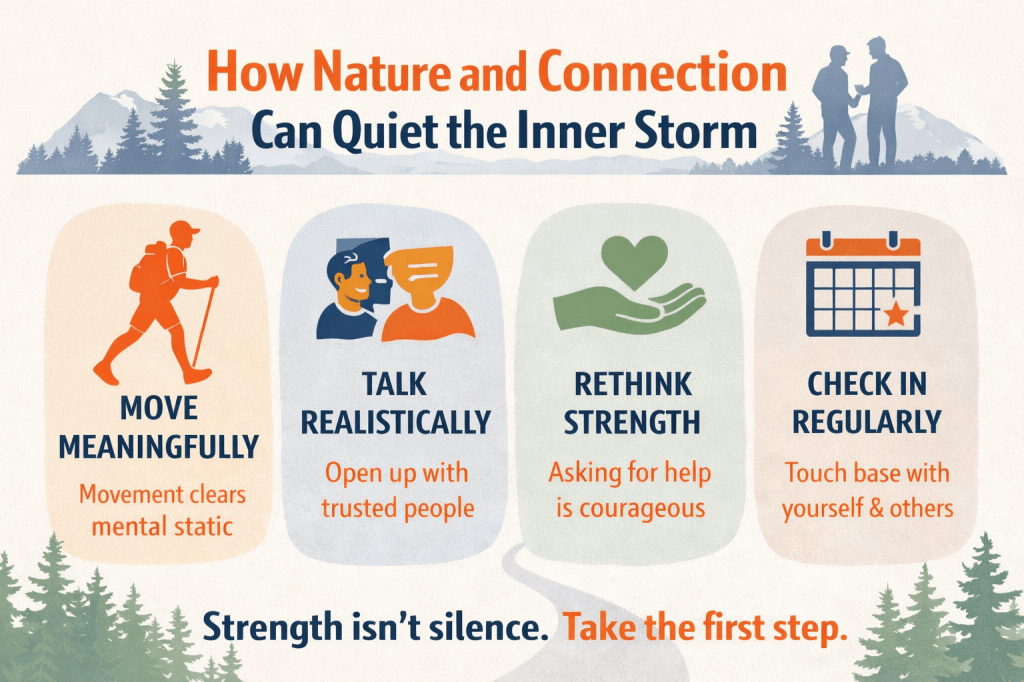
🥾Move meaningfully. Walking, hiking, swimming — movement clears mental static and reduces stress hormones.
🗣️Talk realistically. Start with small truths about how you’re feeling. Real talk with a trusted friend or a support group lowers the emotional barometer faster than social media ever will.
💭Rethink strength. Asking for help isn’t weakness — it’s a tactical decision. It’s strength with insight.
✅Check in regularly. Don’t wait for crisis-level symptoms. Regular check-ins with yourself and with people you trust make a world of difference.
There’s No One “Right” Way Forward
Mental wellbeing isn’t a single destination, it’s a path with many routes. Some men find clarity in therapy, others in community groups, and for some the first step is simply naming the tension they feel instead of brushing it off. The exact steps don’t matter as much as the direction: toward openness, awareness, and care.
This isn’t about being perfect. It’s about being honest — with yourself and others. It’s acknowledging that the old model of silent endurance wasn’t strength in the first place. It was just endurance.
By talking about it, by walking a trail instead of walking away, by seeing emotional health as a real priority, men reclaim parts of themselves they didn’t even know were slipping away.
 Cheese & Jam
Leave a comment